Case 002 · November 2024
M.
Pakistan
A 10-year-old girl born without a right hand, and a design problem that led me to Free3DHands, the nonprofit behind the Kinetic Arm itself.
Pakistan
A 10-year-old girl born without a right hand, and a design problem that led me to Free3DHands, the nonprofit behind the Kinetic Arm itself.
A robotics instructor named Murash posted on the e-NABLE Discord in October 2024 with a careful, humble question. He'd had an idea, he wanted to build something for a student at his school in Karachi whose right arm had no hand. He had no idea how. He was looking for anyone willing to help.
He thought the person who responded, "SimoneBiles", was a man named Simon. I never corrected him.
When the measurements came through, I ran into something I hadn't encountered before. M.'s residual forearm extends further than any standard Kinetic Arm design can accommodate. The socket simply wouldn't fit.
I didn't have files that could solve it, so I reached out to Free3DHands, the Australian nonprofit founded by Mat Bowtell. Mat designed the Kinetic Arm and released it as open source specifically so that more people could access it. His organisation's biomedical engineer worked with me to create a custom forearm section for M.'s exact measurements and sent me the files. I scaled them to 62.5% and printed from there.
The measurement photos Murash sent from Karachi showed the challenge immediately. M.'s forearm is long relative to every standard sizing guide. It needed a bespoke solution, not a scaled-down stock design. Every photo was how a custom arm got built from half a world away.
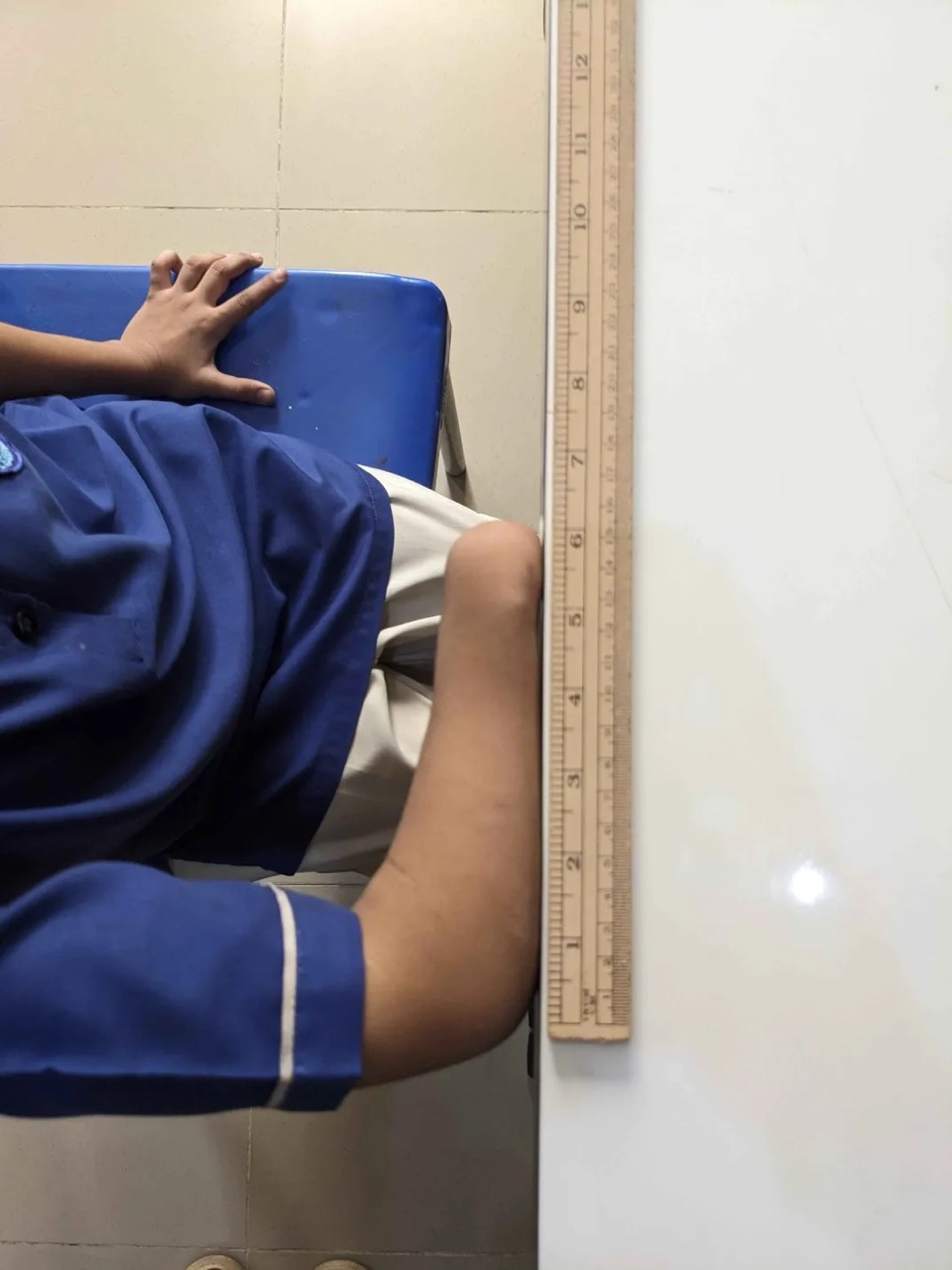
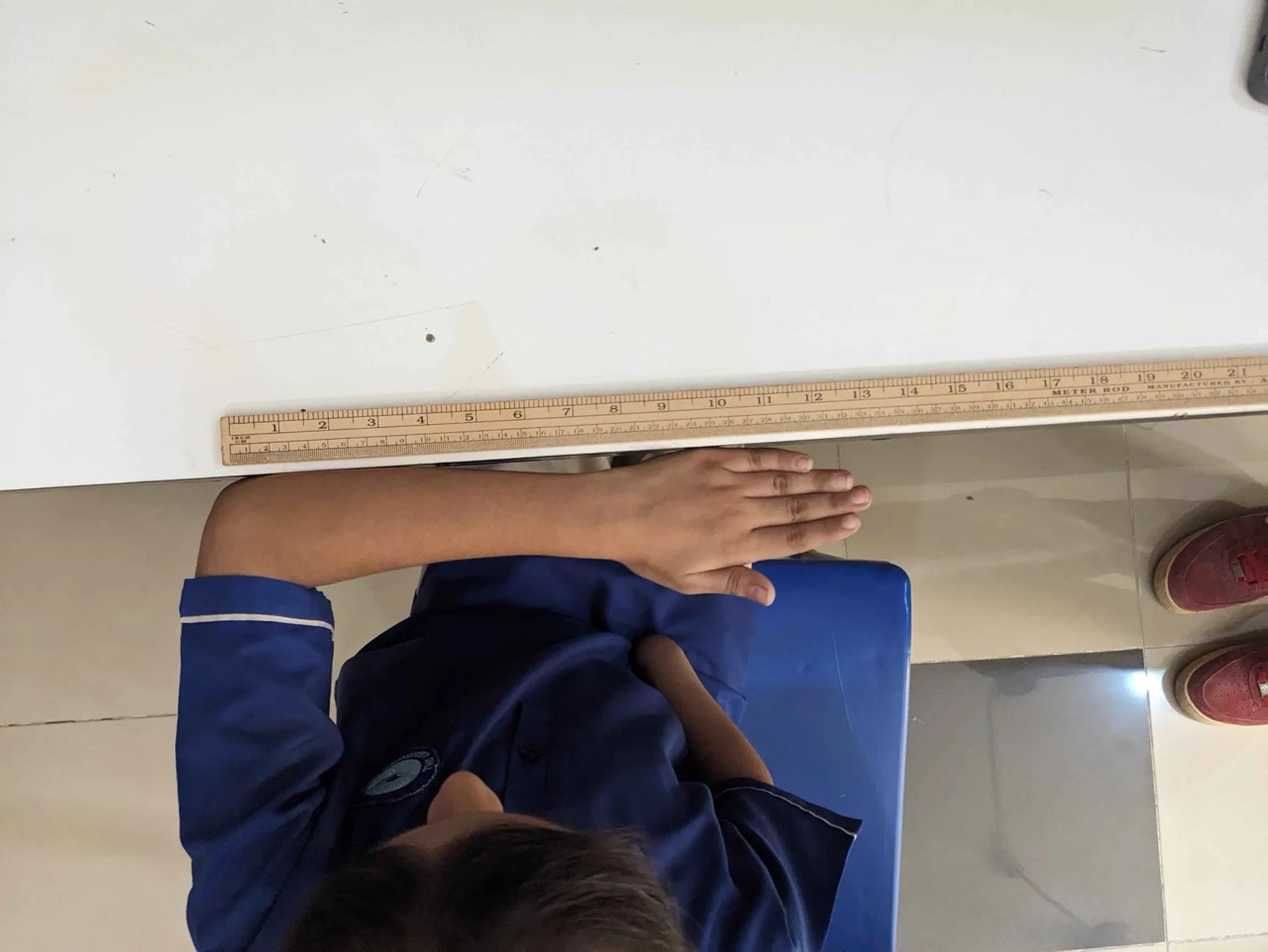
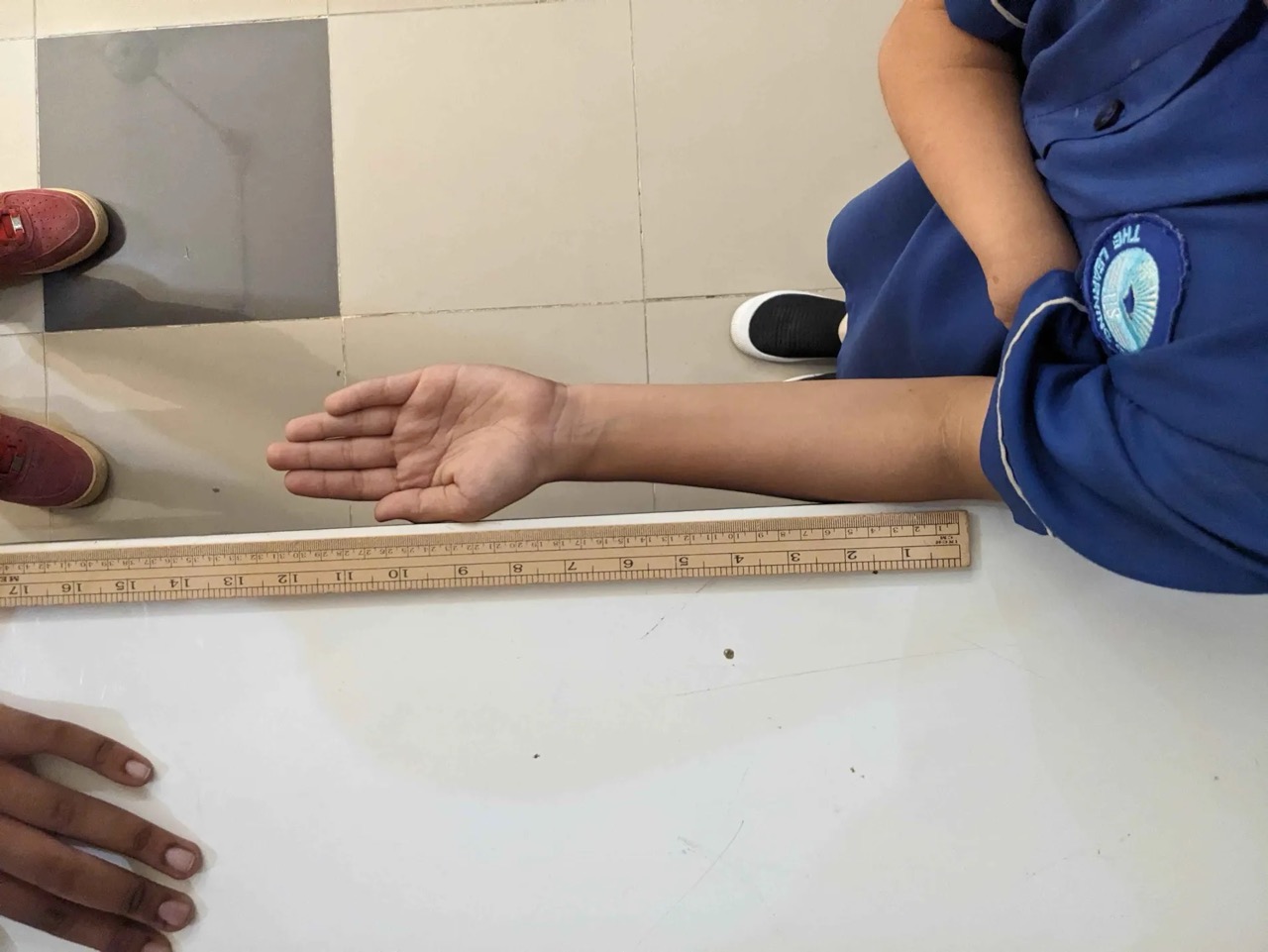
The Kinetic Arm exists because Mat Bowtell spent years designing, testing, and refining it, then made it freely available so volunteers around the world could use it. When M.'s case needed something the standard files couldn't do, Free3DHands' biomedical engineer built the custom forearm geometry and sent it over. Working from those files meant printing dimensions built for one person and no one else. The forearm shell came off the Creality Ender 3 in skin-tone PLA, then the hand, fingers, custom insert, tensioners, assembled piece by piece on the floor of my living room.
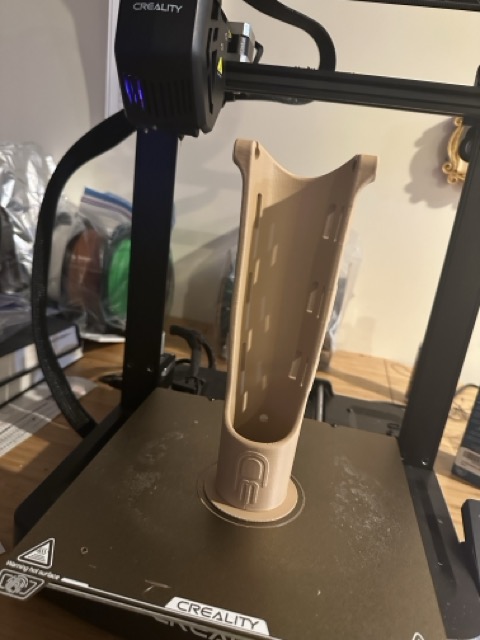
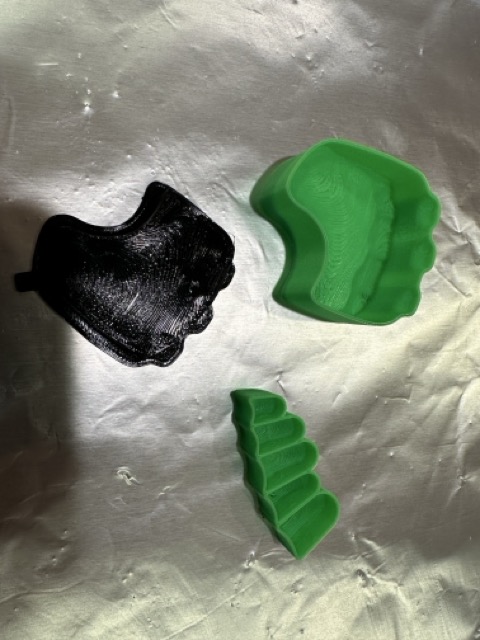
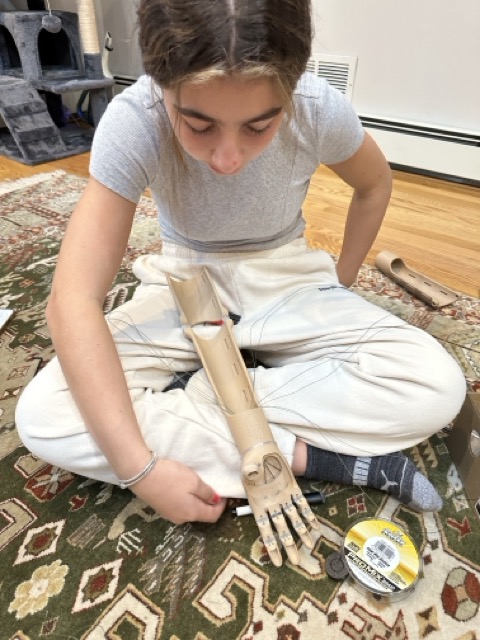
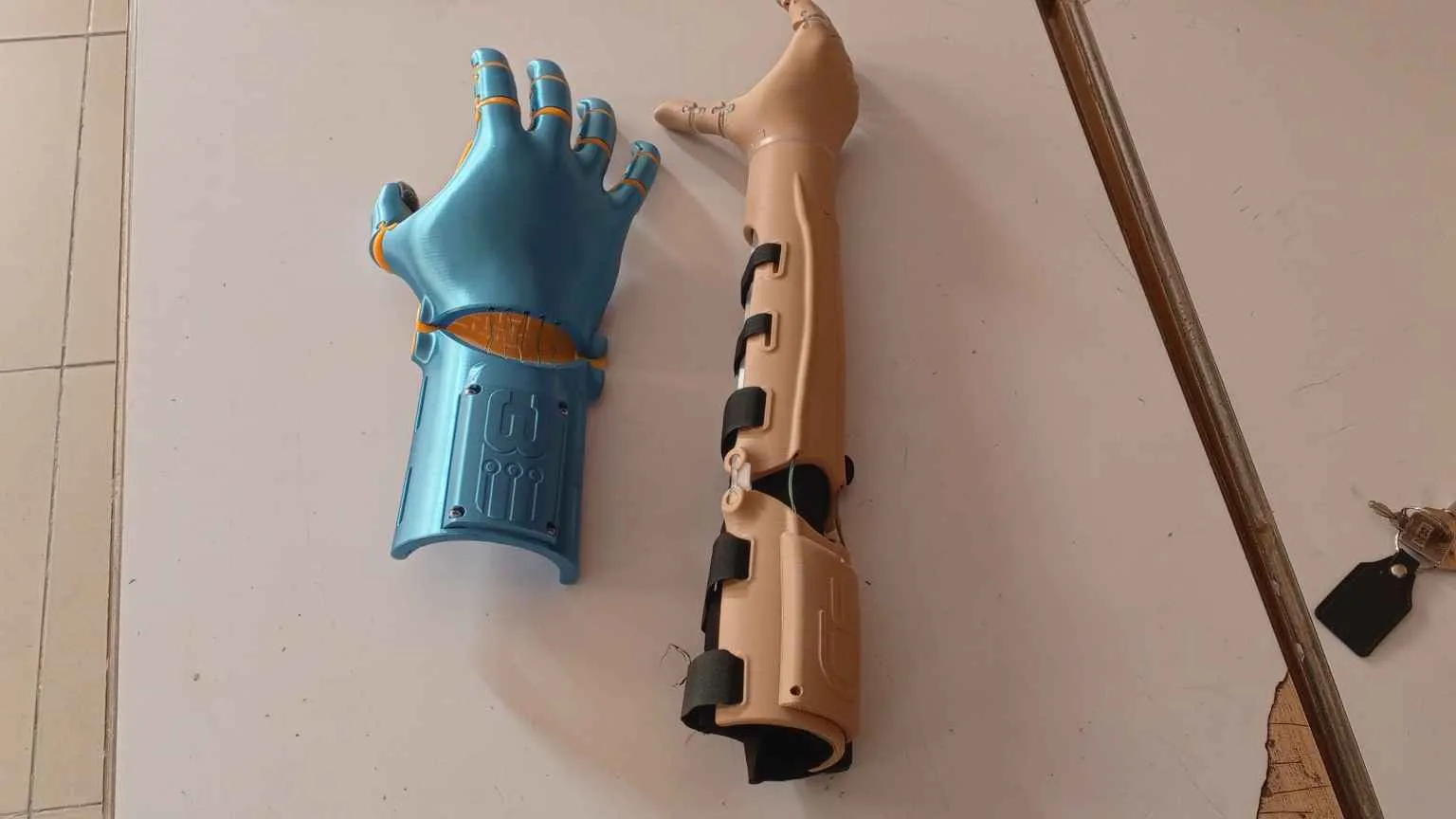
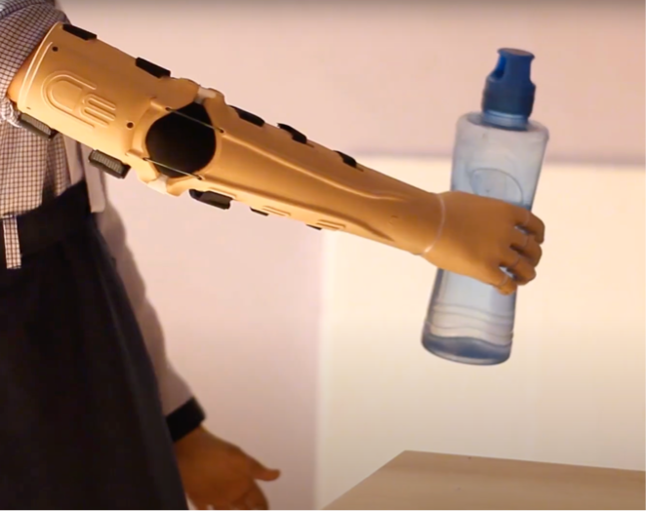
The arm that shipped to Karachi was a Kinetic Arm built to geometry that exists only for M., made possible because Mat Bowtell designed the Kinetic Arm as open source, and because Free3DHands' biomedical engineer was willing to spend time on a case they'd never hear the end of. Custom forearm files, 62.5% scale, skin-tone PLA, assembled and packed in New York, addressed to a school robotics lab in Pakistan.
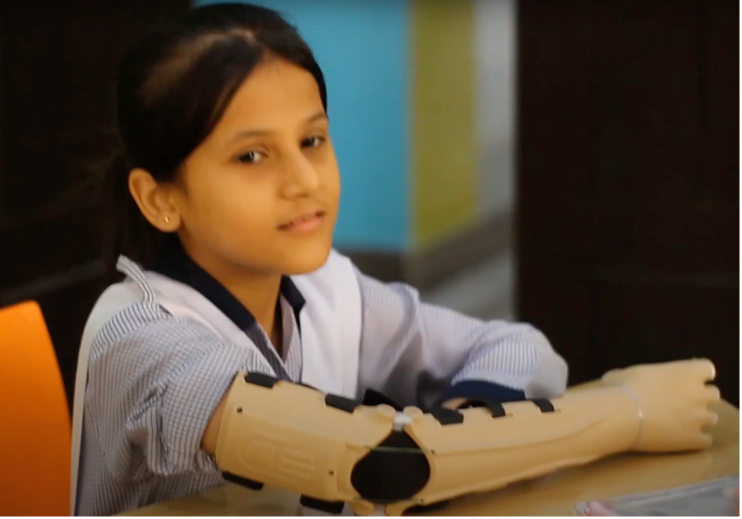
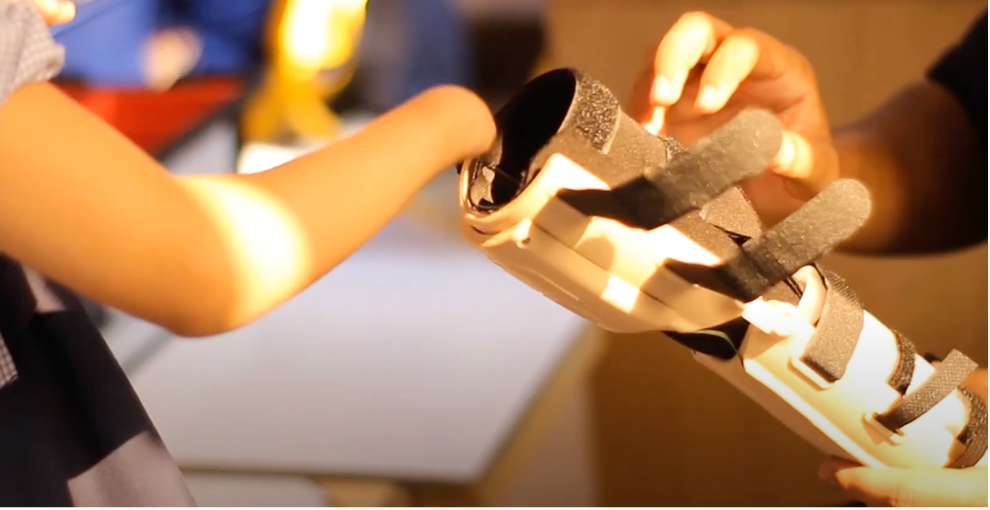
Murash received both packages at the school. He presented the arm to M. in front of her classmates. The school filmed it.
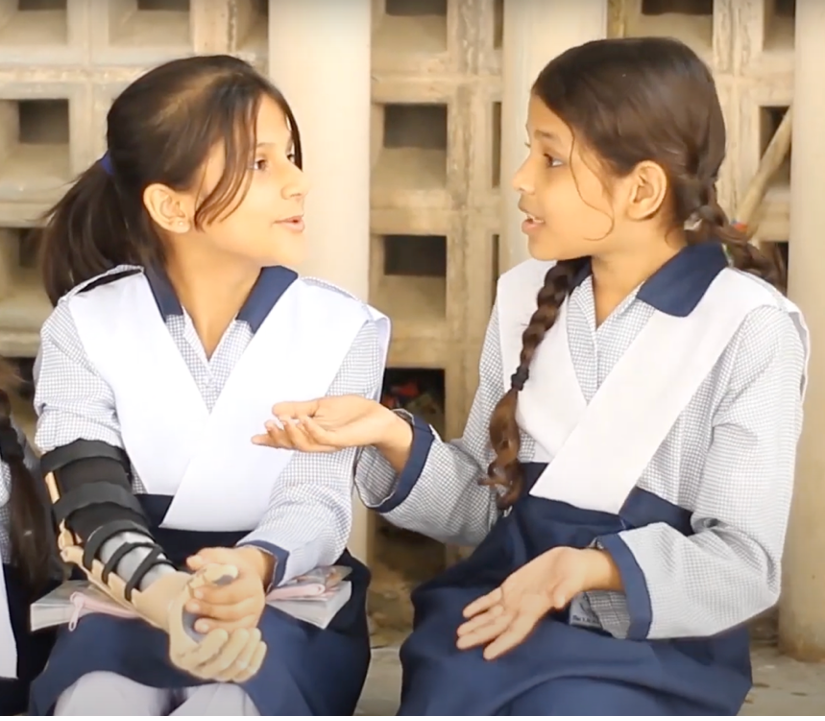
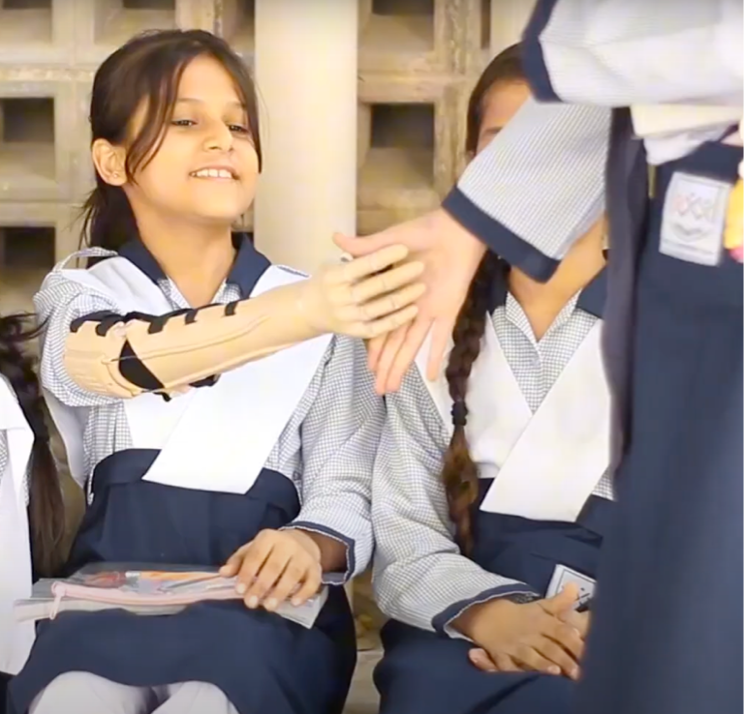
When M. received the arm, the school turned it into a moment. They filmed a short documentary. M. speaking to camera, wearing the arm in class, walking through the school courtyard with her friends. Murash shared the YouTube link in January 2025.
I didn't expect any of it. I just printed an arm and mailed it.
The Learning Space, filmed at M.'s school in Karachi, Pakistan
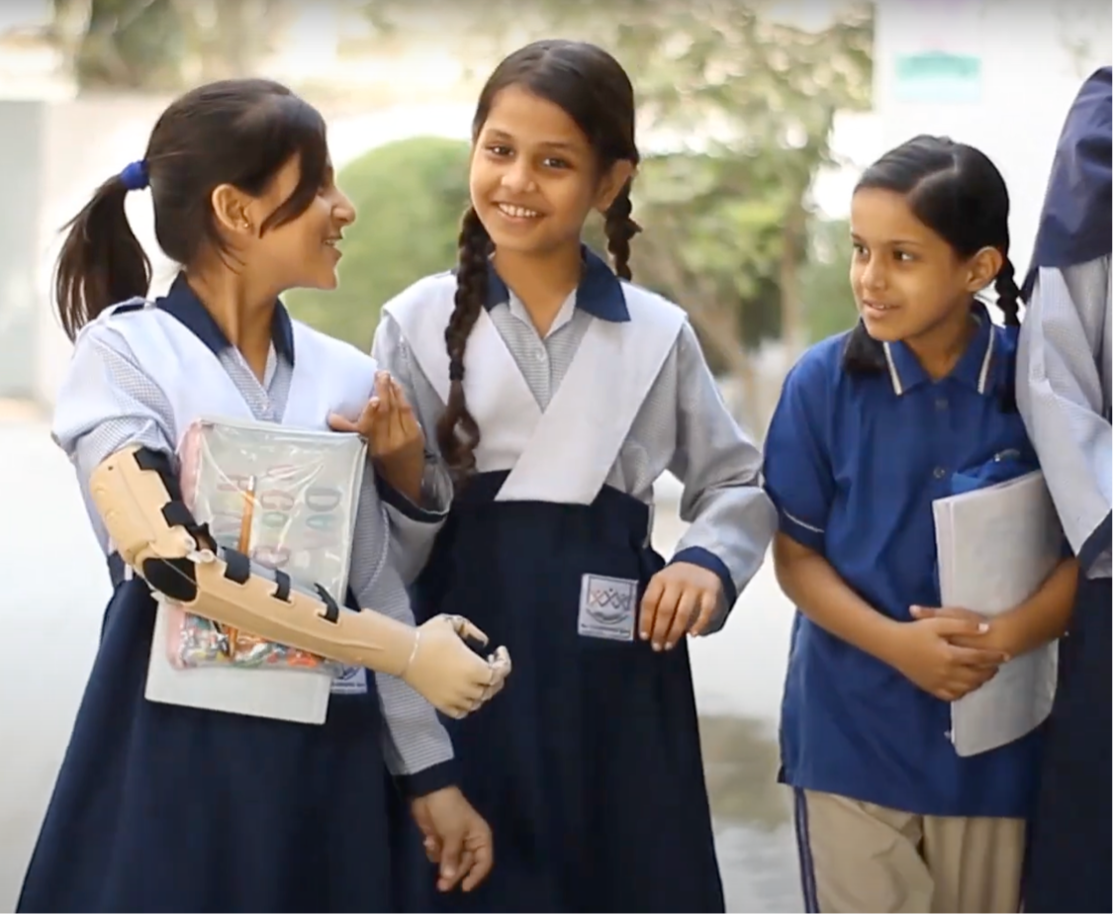
"All credit goes to you, it was all possible because of you. What you've done is making a real difference in a young life. Thank you again, sincerely."
, Murash, Pakistan · June 2025
A few weeks after the delivery, Murash messaged to say M. had come into his class in tears. The joint had cracked. PLA, the material I'd used for the first arm, isn't built for the daily wear of a school-age kid who actually uses it constantly.
I made two new arms: one in PLA+, one in PETG. PETG is significantly stronger and heat-resistant, but harder to print. I had to adjust fan speeds and print settings to get it right. Both arms shipped in May 2025 and arrived in Karachi in June.
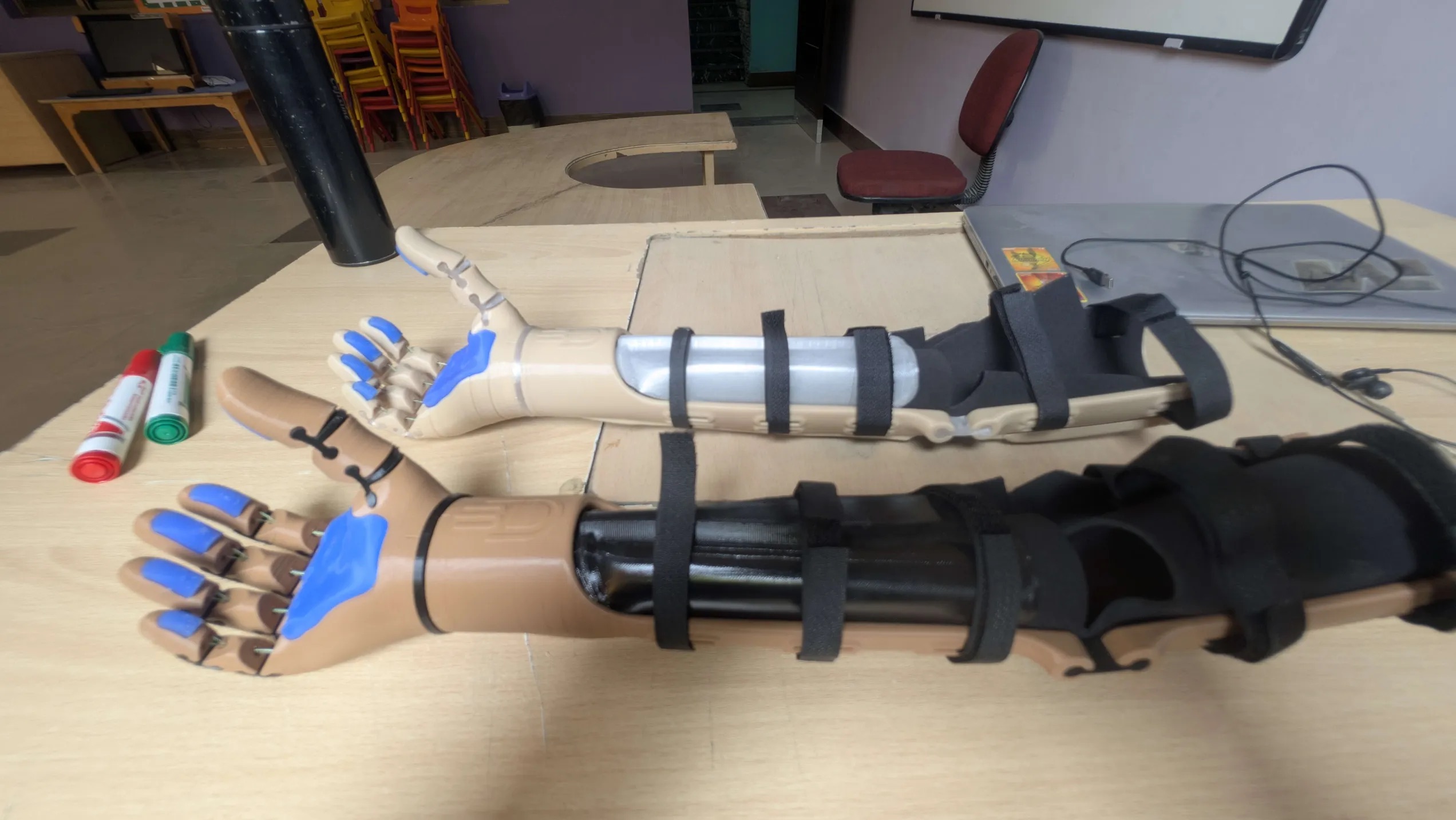
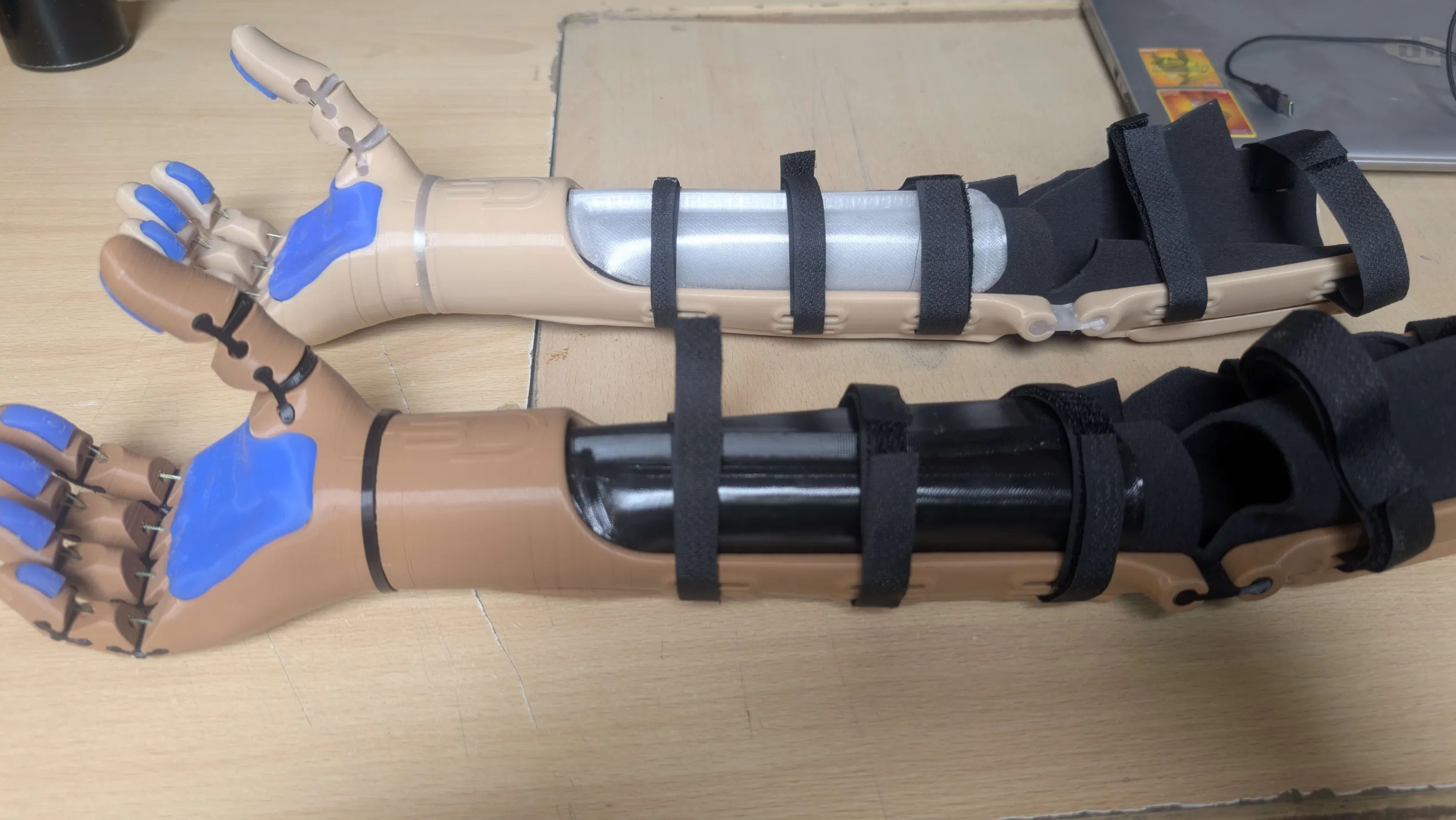
As of February 2026, Murash confirmed that M. has moved to a new school and both arms are still working. Her parents haven't reported any issues. That's the update I wanted.